
Try Hallway Paint Colors on a Photo of Your Own Hallway
Upload a photo of your hallway or entry, describe the wall color in a sentence, and see greige, blue or deep green against your own doors, trim and floor before you pick up a roller.
Free account required. New accounts get 2 free renders (watermarked) in most countries, then paid plans.
Hallway Wall Colors Before and After
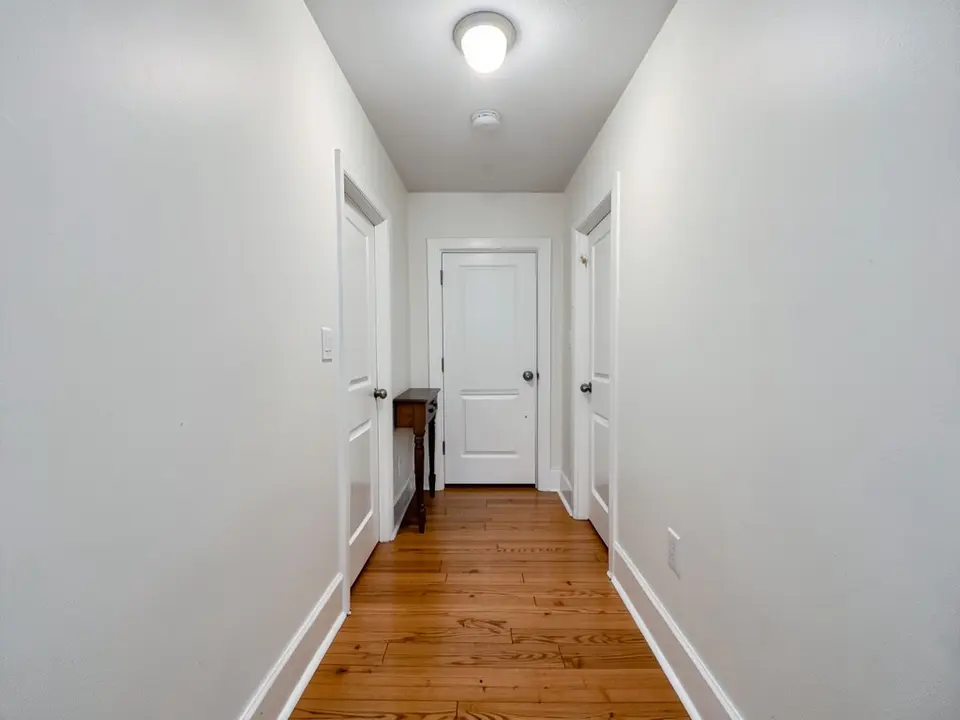
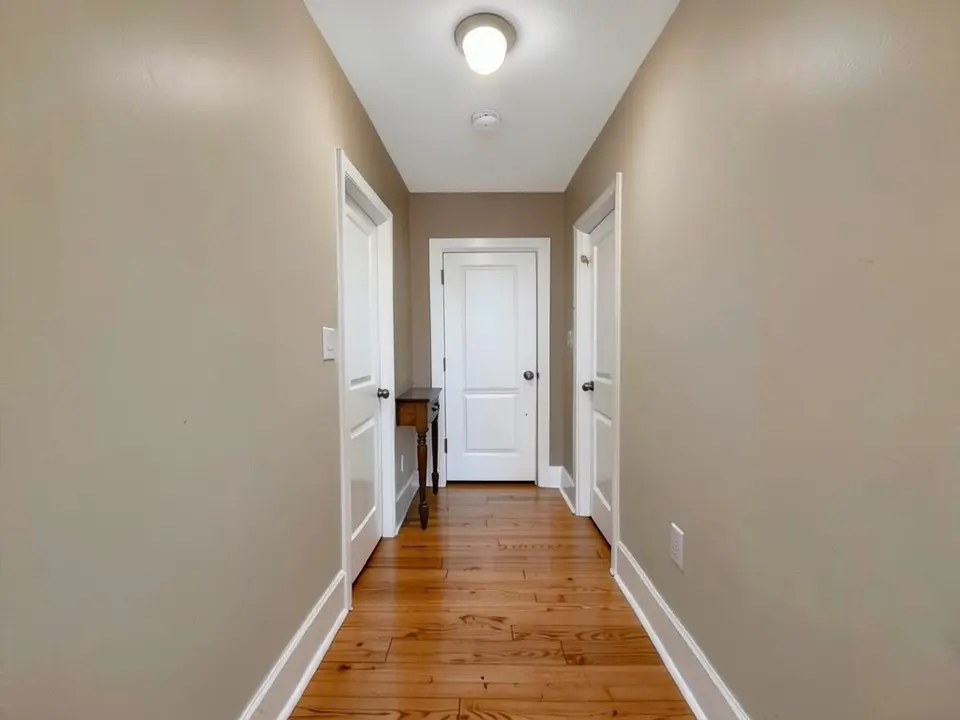
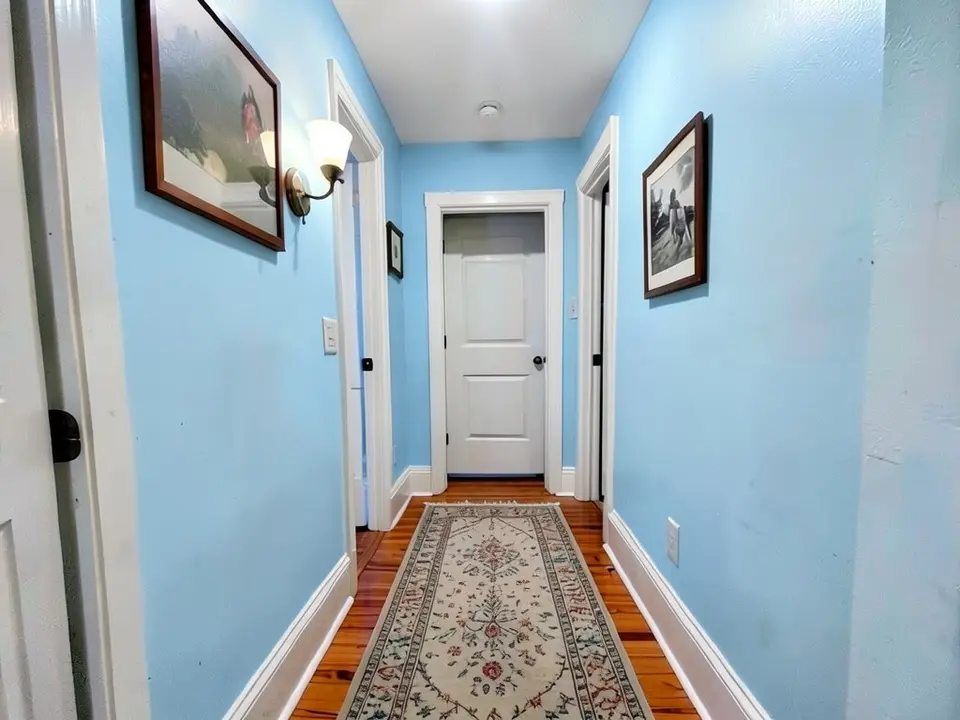
AI-generated sample edits. The before photos are AI-generated sample hallways; the camera angle and light stay the same and the wall color changes. Each caption names anything else that changed. A render shows a color idea, not real paint on a real wall, and real paint looks different under your own bulbs.
 Before
 After
After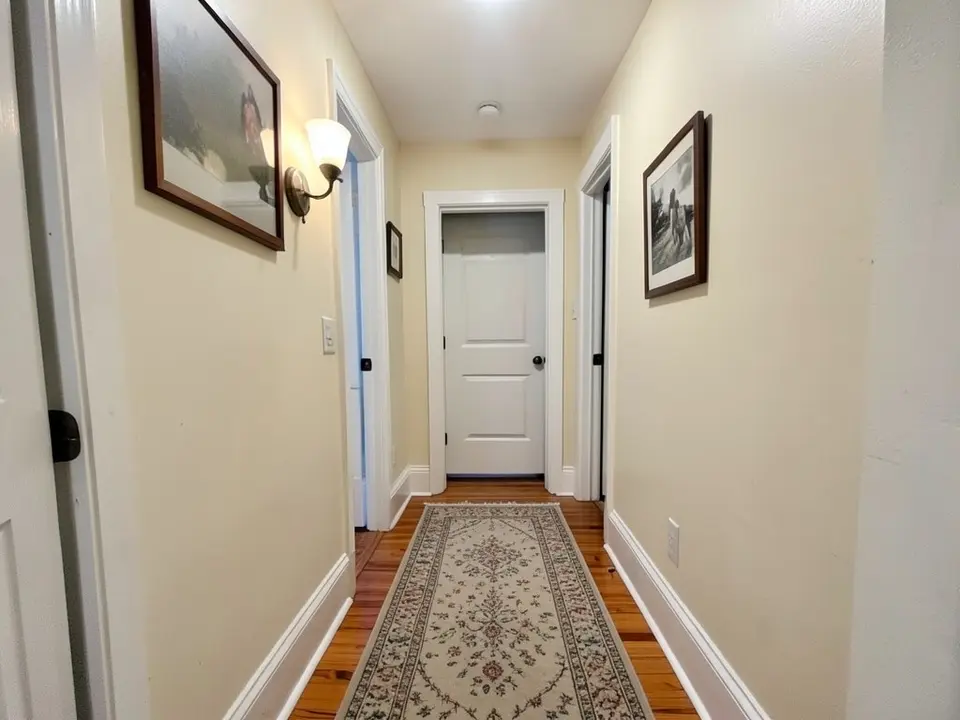 Before
 After
After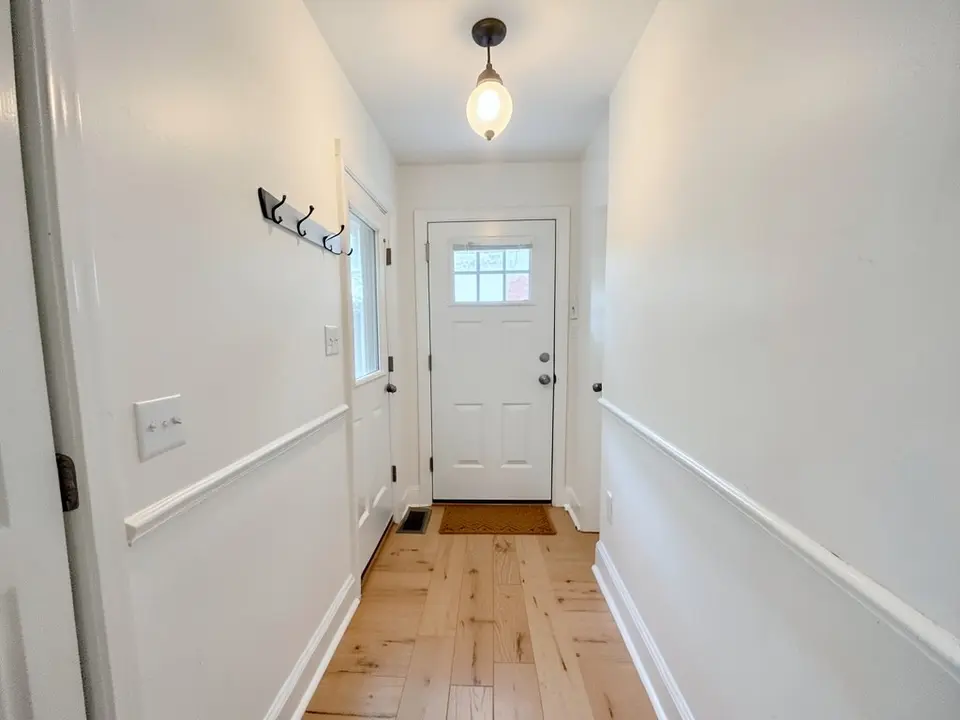 Before
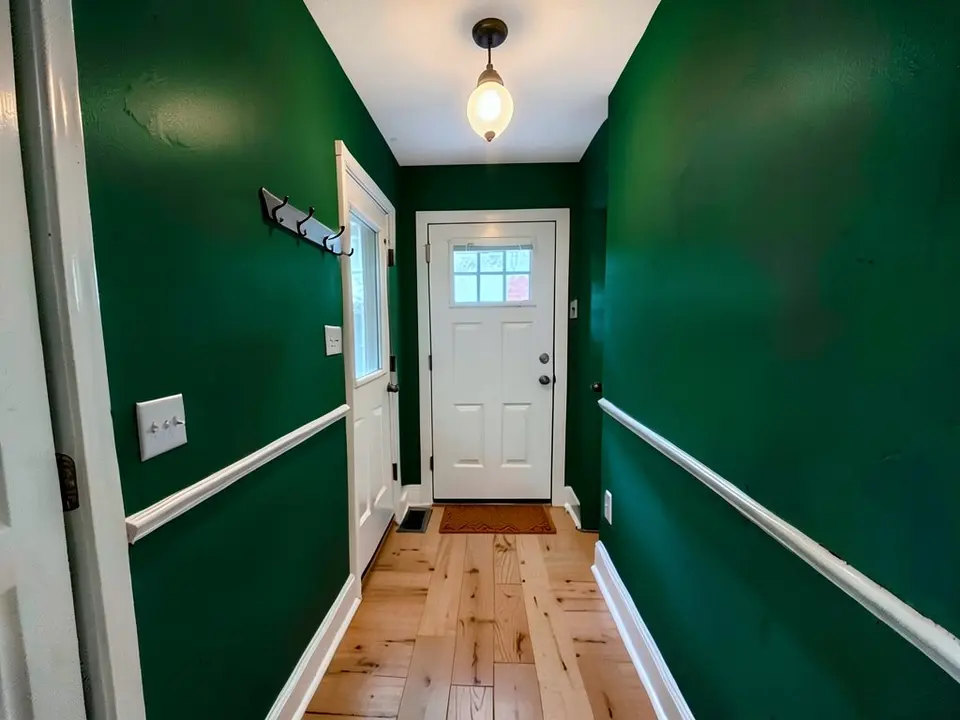 After
AfterHow to Preview Hallway Paint Colors on Your Own Photo
- Take a clear photo. Turn on the hall light, close the side doors you want to keep out of frame, and shoot from one end so both long walls, the baseboards and the floor are in view. Keep the lens level.
- Open the paint tool in Custom mode. Upload the photo and describe the change in one sentence: “Paint only the walls warm greige. Keep the white doors, the baseboards, the ceiling, the floor and the light exactly the same.” Name the doors, trim and floor, because the AI can recolor or redraw them along with the walls.
- Compare two or three colors. Render a short list, such as a light neutral, a blue and a deep green, download the results and look at them on the screen you will decide on. Then paint a large sample on one wall and look at it in the morning and in the evening.
A hallway has more to color than the walls. See the trim paint color visualizer for baseboards and door frames, the interior door colors page for the doors, the accent wall visualizer for one feature wall and the interior paint visualizer.
Hallway Paint Colors to Try
Greige, taupe and warm neutrals
On Real Homes, Erika Woelfel of BEHR says neutrals make hallways feel open. Improovy describes Benjamin Moore Balboa Mist as a pale greige with a warm undertone that looks grayer in north-facing light and beige or taupe in south-facing light. Sherwin-Williams calls Earl Grey a warm gray that offers sophistication without feeling cold. In our example, white walls went a medium taupe.
Pale blues and soft greens
Sherwin-Williams describes Rock Candy as a soft, pale blue that evokes tranquility. On Real Homes, Woelfel says a fresh minty green suits small spaces like stairwells. In our example, cream walls went a bright sky blue.
White and warm off-white
Sherwin-Williams describes creamy Shoji White as a classic light choice that reflects light and can make a space feel larger and more open. Improovy describes Sherwin-Williams Alabaster as a warm off-white with enough undertone to hide occasional scuffs, and says Sherwin-Williams Pure White, a lighter-toned shade, will likely need more touch-ups than darker colors.
Deep green and other dark colors
Real Homes suggests a deep forest green in hallways to create boldness and guide the eye forward, and quotes Joa Studholme of Farrow & Ball saying deep colors contrast with adjoining rooms, making them look lighter and larger. Sherwin-Williams describes Iron Ore as a dark neutral for a bold, cozy space, especially in larger areas. In our example, white walls went a deep emerald.
Before You Paint Your Hallway
- Think about light first. Sherwin-Williams calls lighting the most critical factor, and says that in hallways with no windows or limited natural light, warm-toned colors with a higher light reflectance value (LRV) reflect the most light.
- Look at the rooms the hallway connects. Improovy says to coordinate with them: a neutral hallway when the other rooms use distinct shades, a bolder hallway when they are neutral.
- Choose the finish for traffic. Improovy says eggshell or satin resists scuffs better than flat or matte, and Sherwin-Williams says satin or semi-gloss add durability in high-traffic areas.
- Plan the trim. Sherwin-Williams says a trim color different from the walls can highlight features like wainscoting or door frames, and describes Snowbound as a crisp white that pairs with nearly any wall color.
- Do not forget the ceiling. On Real Homes, interior designer Cecilia Casagrande says not to forget it.
- Check the details in the render. In our examples the greige target came out a darker taupe than a light greige, a rug pattern was redrawn and one chair rail looked wavy, so compare the render against your real hallway before you decide.
Hallway advice here is drawn from Sherwin-Williams, Improovy and Real Homes (Christina Chrysostomou and Anna K. Cottrell, 14 September 2021), which we opened directly. Sherwin-Williams is a paint maker and Improovy is a painting company that sells its own services, so weigh their advice accordingly. The color names in those sources are theirs, not ours. This is general guidance, not a rule for your hallway.
Hallway Paint Colors FAQ
Is the hallway paint color visualizer free?+
You need a free account to generate. New accounts in most countries get enough free credits for up to 2 renders, and free renders carry a small watermark. After that, paid plans on the pricing page give you more renders without the watermark.
Do I need to sign up?+
Yes. Rendering requires an account so your credits and results can be saved. You can sign in with Google or a one-time code sent to your email.
Can it change only the walls and keep my doors, trim and floor?+
That is the goal, and the best results come when you name the parts to keep, for example “paint only the walls greige, keep the white doors, the baseboards, the ceiling, the floor and the light exactly the same”. It is an AI edit, not a mask, so check the result. In our examples the doors and trim looked the same, but floor grain and a rug pattern were redrawn and one chair rail came out slightly wavy.
What color should I paint a narrow hallway?+
Sources lean light, but do not agree on everything. Improovy, a painting company, suggests bright whites, light grays or warm off-whites plus a mirror at the end, and its FAQ says to avoid darker shades in narrow hallways because they absorb light. Sherwin-Williams, a paint maker, names creamy Shoji White as suited to narrow hallways. Try a few on a photo of your own hallway and compare.
Can I use a dark color in a hallway?+
Some sources say yes. On Real Homes, Erika Woelfel of BEHR says darker, evocative colors suit traditional and maximalist decor and high-traffic hallways, and Joa Studholme of Farrow & Ball says deep colors contrast with adjoining rooms, making them look lighter and larger. Improovy’s FAQ, by contrast, says to avoid darker shades in narrow hallways. In our example a deep emerald made the entry read much darker.
What paint finish is best for a hallway?+
Improovy says eggshell or satin resists scuffs better than flat or matte, and that matte is easier to touch up. Sherwin-Williams says higher sheens such as satin or semi-gloss reflect more light and add durability in high-traffic areas. The render does not show sheen, so choose it from the product guide.
Will it show how the paint looks under my lights?+
No. The render shows a color idea. Sherwin-Williams calls lighting the most critical factor because colors look different under different lighting, so paint a large sample on your wall and look at it at different times of day before you buy gallons.
Sources
- Sherwin-Williams: hallway paint colors (a paint maker’s page: light and dark colors, lighting, sheen, trim)
- Improovy: 9 best hallway paint color ideas (Andre Kazimierski, founder of Improovy, published February 7, 2023; a painting company)
- Real Homes: hallway paint ideas (Christina Chrysostomou and Anna K. Cottrell, 14 September 2021; Farrow & Ball and BEHR experts quoted)
Related Color Visualizers
- Interior paint visualizer – walls and whole rooms
- Trim paint color visualizer – baseboards and door frames
- Interior door colors – doors along the hall
- Accent wall visualizer – a feature wall at the end
- Match paint color from a photo – find a color you already like
- Basement paint colors – another low-light space
See Your Hallway in a New Color
Upload one photo and compare a few wall colors before you paint.