
See Stucco Colors on a Photo of Your Own House
Upload a photo of your stucco home and the AI repaints the walls in the color you choose, so you can compare warm white, sand, greige, sage or charcoal against your real roof, trim and landscaping before you buy paint or book a painter.
Free account required. New accounts in most countries get free credits for up to 2 renders (watermarked), then paid plans.
Stucco House Colors Before and After
AI-generated sample edits. The before photos are AI-generated sample houses; the house, camera angle and light stay the same and only the stucco color changes.
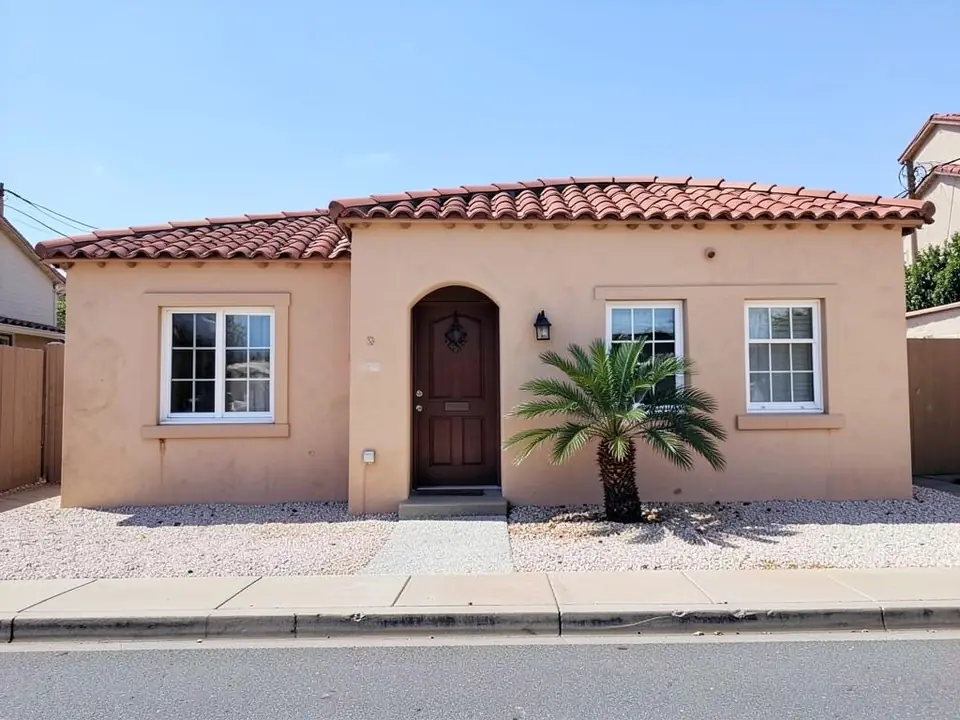 Before
 After
After Before
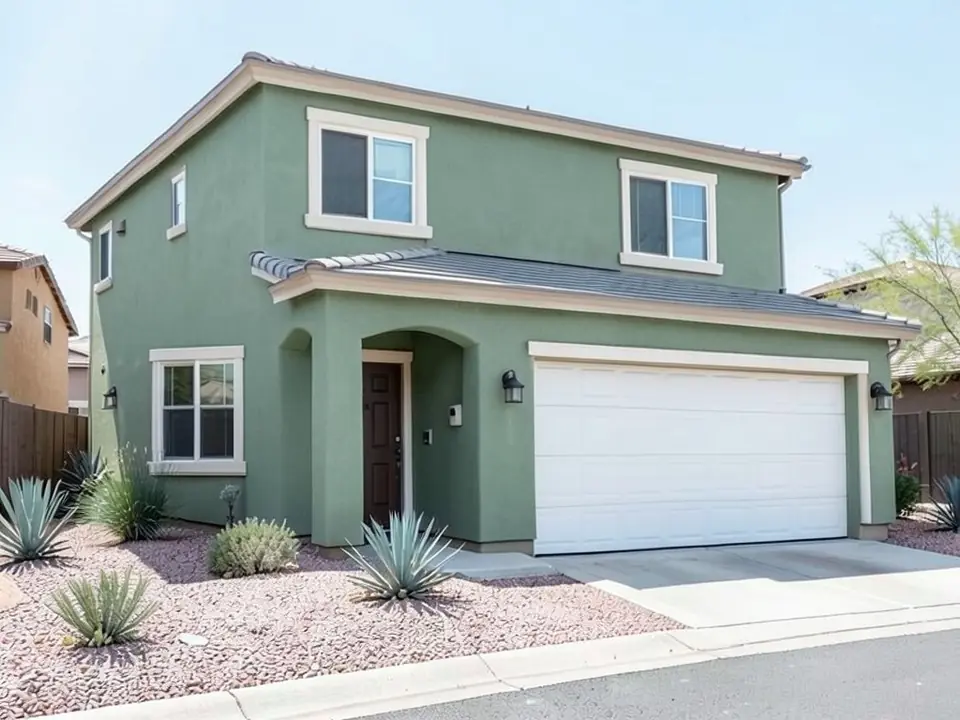 After
After Before
 After
AfterHow to Preview a Stucco Color on Your Home
- Take a straight-on photo. Stand across the street and fit the whole front of the house in the frame. Overcast daylight is best because hard shadows exaggerate the stucco texture.
- Open the exterior paint tool. Upload the photo, pick the building type and type a color in plain words, such as "warm sand beige". To keep the roof, trim and door exactly as they are, or to try a two-tone scheme, switch to Custom mode and write it out: "repaint only the stucco walls in muted sage green, keep the tile roof, white trim, windows and front door the same".
- Compare three or four options. Download each render and look at them side by side. Then paint large sample patches of the winner and one runner-up on a sunny wall and a shaded wall before you commit.
It suits homeowners tired of builder beige, buyers picturing a dated house after a repaint, people who need to show an HOA or partner the idea, and painting contractors who want to show a client the new color on their own house before the job starts.
Popular Stucco Colors and When They Work
- Warm whites and cream. The classic Mediterranean and Spanish look, and a natural partner for red or terracotta tile roofs and dark wood doors. Pick a white with a little warmth: stark blue-whites can glare in strong sun. White shows dust and irrigation splash sooner, so plan on washing it.
- Sand, tan and greige. The most common stucco family for a reason: it hides dust, suits desert and suburban settings and works with both clay and gray concrete roofs. To avoid a flat "builder" look, lean slightly warmer or slightly grayer than the house next door and use a crisp trim color.
- Sage and olive greens. Muted greens sit well next to gravel, agave, olive trees and lawns, and they look softer on textured stucco than on smooth siding. Keep them grayed down; a bright green on a big stucco wall reads louder than the chip.
- Terracotta and clay. Warm earth tones suit Spanish Colonial, Pueblo and adobe-style houses. They work best when the roof is a different value, so a clay wall under a clay roof does not blend into one block.
- Charcoal and near-black. A modern choice for flat-roof and contemporary houses, often with black windows and a wood door. Dark colors absorb more heat and can show fading sooner on sun-facing walls, which matters in hot climates.
Start from what is not changing: the roof, stone, brick, windows and the neighbors. A stucco color that fights a brown roof or tan window frames will look wrong however nice it is on a swatch. If your house mixes stucco and brick, see the brick paint visualizer, and for a quick accent change try the front door color visualizer.
Why Stucco Colors Look Different on the Wall
- Texture adds shadow. Sand, dash and lace finishes break the light into small shadows, so most colors read a touch darker and grayer than the chip. A smooth modern finish looks closer to the sample.
- Sun bleaches, shade deepens. One wall in full sun and one in shade can look like two different colors. Judge samples on both.
- Big walls amplify color. Stucco houses often have large, unbroken wall areas, so a color looks stronger on the house than on a small card. When in doubt, go one step softer.
- Neighbors and HOAs matter. Many planned communities with stucco homes have an approved color list. Check it first and preview only the colors on it, then bring the renders to the approval request.
Paint, Elastomeric or a New Color Coat?
Acrylic exterior paint
The usual choice for sound stucco. A quality 100% acrylic lets water vapor escape, comes in any color and is the easiest to change again later.
Elastomeric coating
A thick, flexible coating that bridges hairline cracks and sheds driving rain. It breathes less, so it can trap moisture on a damp wall, and it is hard to paint over with ordinary paint later.
Cement color coat
A plasterer applies a thin new finish coat with the color mixed in. The color runs through the layer, so wear shows less, but it costs more and the color range is narrower than paint.
Prep That Makes a Stucco Color Last
- Wash the walls gently. High pressure can gouge soft stucco and force water into it.
- Fill cracks with a patch product made for stucco and match the texture so patches do not show through.
- New or freshly patched stucco must cure before paint: often about 28 days (check the product) so its alkalinity drops. Brush off any white efflorescence and use an alkali-resistant masonry primer.
- Fix leaks, sprinkler overspray and gutters first. Paint over a wet wall will blister and peel.
- Use a masonry primer where the wall is chalky, patched or new, and a flat or low-sheen finish to hide texture.
- On an older house with existing paint, test for lead before anyone sands or scrapes.
Stucco Color Visualizer FAQ
Is the stucco color visualizer free?+
You need a free account to generate. New accounts in most countries get enough free credits for up to 2 renders, and free renders carry a small watermark. Paid plans on the pricing page give more renders without the watermark.
Do I need to sign up?+
Yes. Rendering requires an account so your credits and results are saved. You can sign in with Google or with a one-time code sent to your email.
Can I type a Sherwin-Williams or Benjamin Moore color name?+
You can type any color name, but the AI does not look up brand paint codes, so describe the color in plain words as well, such as "warm creamy white" or "muted gray-green sage". Treat the render as a preview of the look, then confirm the exact paint with a physical sample.
Will the render keep my roof, windows and trim?+
Usually, but the most reliable way is Custom mode. Write what changes and what must stay, for example "repaint only the stucco walls in sand beige, keep the red tile roof, the white trim, the windows and the front door".
Why does stucco look darker than the paint chip?+
Stucco texture casts thousands of tiny shadows, so the same paint usually reads a little darker and duller on a rough finish than on a smooth chip. Strong sun can also wash light colors out. That is why a test patch on the real wall matters.
What paint should I use on stucco?+
For sound stucco, painters usually use a 100% acrylic exterior paint because it lets moisture escape. Elastomeric coatings bridge hairline cracks but breathe less and are hard to change later. Historic lime stucco needs a breathable mineral paint. Ask a local painter which suits your wall and climate.
Can I change the stucco color without painting?+
Yes. A plasterer can apply a new cement-based color coat with the pigment mixed in. It is a bigger job than paint but the color goes through the whole layer. The visualizer shows the color either way; it does not know which method you use.
What photo works best?+
A straight-on daylight photo of the whole front of the house, taken from the street. Overcast light gives the most even result because there are no hard shadows.
Try Stucco Colors on Your House
Upload one photo and compare white, sand, sage and charcoal before you paint.